
Tom Yum Kung – a Spicy and Sour Thai Soup. Ingredients and History
August 23, 2026Tom Yum Kung, also written Tom Yum Goong, is one of Thailand’s best-known dishes and one of my personal favorites in Thai cuisine. This sour and often slightly spicy soup combines shrimp with lemongrass, galangal, lime and chili, ingredients that together give it its distinctive flavor. In this article, I take a look at the dish’s origins and what characterizes a really good tom yum kung.
General Facts
• Tom yum kung in Thai: ต้มยำกุ้ง.
• Tom (ต้ม) means to boil. Yum (ยำ) means to mix or combine. Kung (กุ้ง) means shrimp.
• Tom yum varieties: In addition to tom yum kung, which contains shrimp, there are tom yum gai with chicken, tom yum pla with fish, tom yum talay with seafood and tom yum hed with mushrooms.
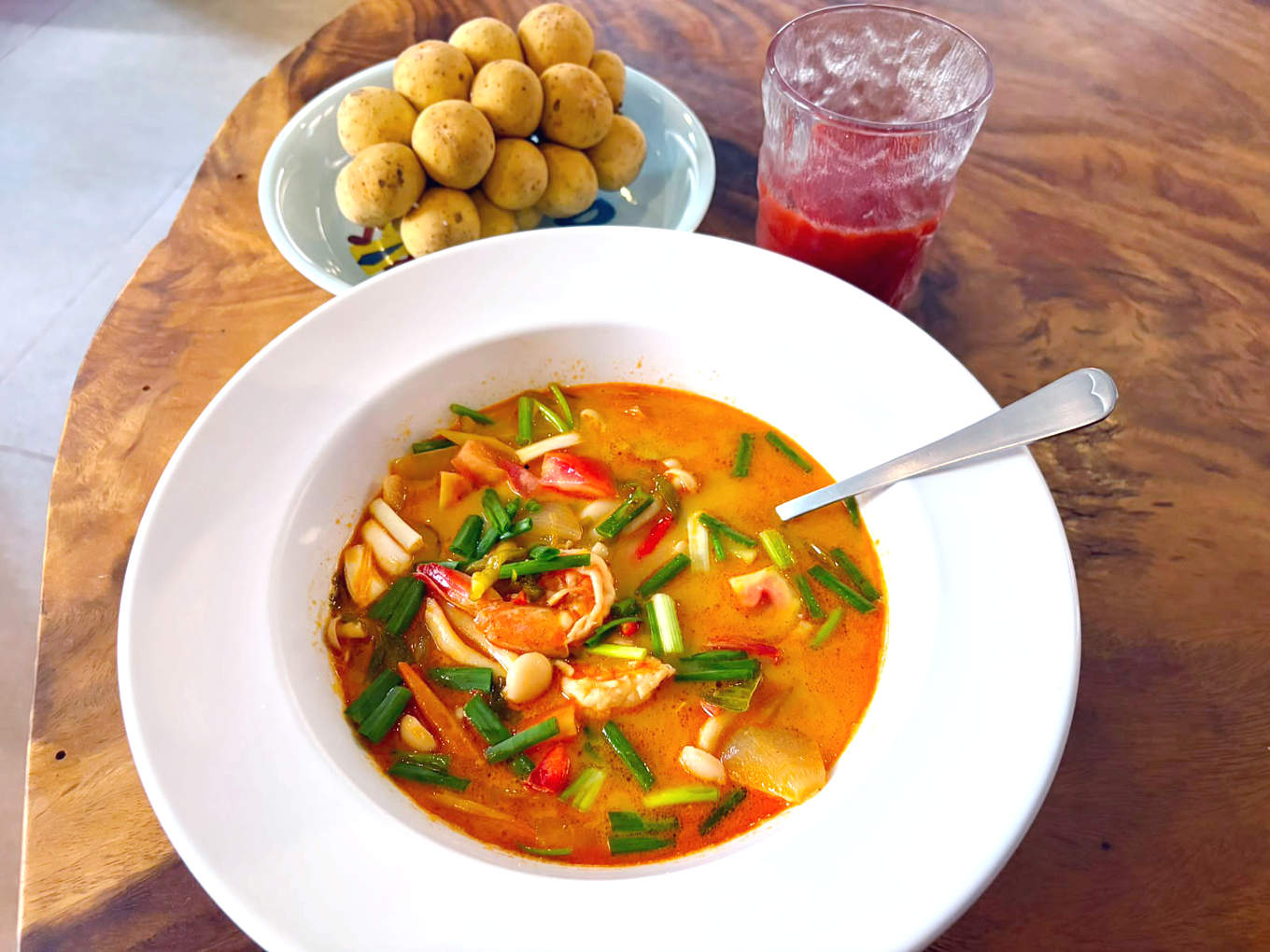
Image: Tom yum kung with shrimp and coconut milk prepared at a restaurant on Koh Samui. Photographer: Jens.
The Historical Origins of the Dish
According to UNESCO, tom yum kung has its roots in Buddhist communities along the rivers of central Thailand. For centuries, the region has been an important agricultural area, and the people living there have had close ties to rivers, canals and other aquatic environments. The availability of freshwater shrimp was an important factor in the dish’s development. It is also described how local communities traditionally avoided killing larger animals and instead made use of the abundant freshwater shrimp available to them.
The exact development from earlier tom yum dishes to the tom yum kung served today is not fully documented. There is, however, early written evidence. In 1898, the recipes tom yum kung song khrueng and tom yum kung hed khon were documented in Tam Ra Patanukrom: Kan Tham Khong Khao Khong Wan, although they differ considerably from the tom yum kung served today. The 1908 cookbook Mae Krua Hua Bpak also contains related dishes, including kaeng nok mhor and tom yum khmer.
The Modern Version
A tom yum kung closer to the modern version is documented from 2 April 1962. On that day, M.L. Kitinadda Kitiyakara prepared a tom yum kung for King Bhumibol Adulyadej and Queen Sirikit at Klai Kangwon Palace in Hua Hin. The recipe was later documented in the royal cookbook Khong Sawoey, which was published in 1964.
The historical recipe also differs from many modern methods of preparation. Lime juice, fish sauce and chili were added directly to the serving bowl, after which the hot broth was poured over the shrimp and herbs. This differs somewhat from the common method used today, in which the ingredients are cooked together in the pot.
The Main Ingredients
Several ingredients are particularly associated with tom yum kung:
• Lemongrass (ตะไคร้) provides a fresh, citrusy and herbal aroma.
• Kaffir/makrut lime leaves (ใบมะกรูด) provide an intense citrus aroma and are an important part of the dish’s characteristic fragrance.
• Galangal (ข่า) contributes a peppery, earthy and aromatic flavor. Galangal is closely related to ginger, but it is a different plant.
• Shrimp (กุ้ง) has particular significance in the historical background of the dish. In Thailand today, several types are used depending on availability, recipe and region. Freshwater shrimp are still commonly used, but marine shrimp and tiger prawns are also found in modern versions.
Other common ingredients include fresh chili, lime juice, fish sauce, shallots and mushrooms. Tom yum kung may also contain ingredients such as coriander, and recipes vary both between regions and between different types of tom yum.
The Characteristic Flavors
Tom yum kung is characterized by a clear balance between several flavors:
• Heat – mainly from fresh chili.
• Sourness – primarily from lime juice.
• Saltiness and umami – mainly from fish sauce and shrimp.
• Sweetness – can come naturally from the shrimp. Some recipes also include a little sugar.
• Aromatics – from lemongrass, kaffir lime leaves, galangal and other fresh herbs.
Tom yum kung is a dish where sour, salty, spicy, sweet, creamy and slightly bitter flavors come together. The balance varies, however, between different recipes and versions.
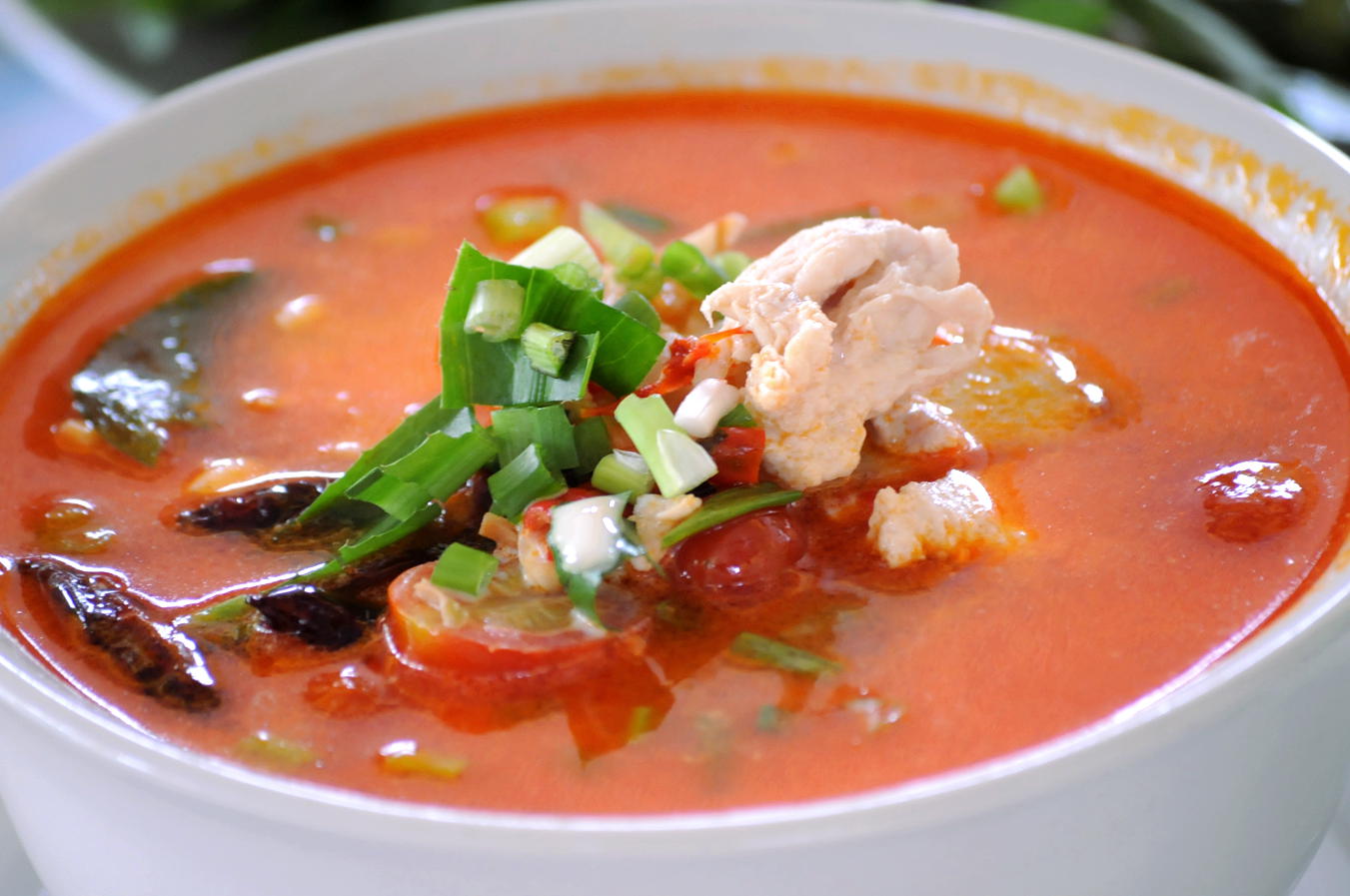
Image: A tom yum gai, which is a tom yum soup with chicken. Photographer: Jens.
Nam Sai and Nam Khon
Tom yum kung is commonly divided into two main types, depending on the character of the broth:
• Tom yum kung nam sai (ต้มยำน้ำใส) is a clear and relatively light broth without milk or coconut milk, allowing the herbs, acidity and chili to stand out with a distinct and direct flavor profile.
• Tom yum kung nam khon (ต้มยำน้ำข้น) is a richer and creamier broth that, depending on the recipe, may contain ingredients such as coconut milk or evaporated milk. Nam prik pao, a roasted Thai chili paste, is often used to add color, sweetness and depth, resulting in a richer and more rounded flavor than nam sai.
In older documented methods of preparation, the broth was kept clear, and lime juice, fish sauce and chili were usually added only when the dish was served. Today, lime juice is also often added toward the end of cooking or after the heat has been turned off, as this helps preserve its fresh acidity.
Tom Yum Kung on UNESCO’s List
In 2024, the dish was inscribed on UNESCO’s Representative List of the Intangible Cultural Heritage of Humanity.
The organization highlights tom yum kung’s connection to the river and agricultural communities of central Thailand and the local natural resources. The intangible cultural heritage includes knowledge of local ingredients and herbs, how they are used and combined, and how cooking practices have adapted to the local environment.
✪ Link to UNESCO’s listing of the dish
Tom Yum Kung in and Beyond the Kitchen
• The Asian financial crisis of 1997 has come to be associated in Thailand with the expression Tom Yum Kung Crisis. The term refers to the economic crisis that hit Thailand and later spread to several other Asian countries.
• The Thai action film Tom-Yum-Goong premiered in 2005 and was marketed as The Protector in some countries. The film starred actor and martial artist Tony Jaa, and its title was taken from the name of the dish.
• Tom yum kung has spread far beyond Thailand and is now served at Thai restaurants around the world. The dish has also inspired modern variations and fusion dishes, including tom yum fried rice, tom yum pasta and tom yum udon.
If you have not already tried this legendary dish, I definitely think you should. If you do not like or cannot eat shrimp, my recommendation is tom yum gai with chicken.
Sources:
• UNESCO – Tomyum Kung, Representative List of the Intangible Cultural Heritage of Humanity.
• Department of Cultural Promotion, Ministry of Culture, Thailand – Tom Yum Kung: Tastiness from Cuisine to Culture.
• Thailand Foundation – Tom Yum Kung: The Symbol of Thai Culinary Spirit.
✪ Read more: All my articles and posts
✪ Enjoy my articles? Feel free to buy me a coffee – much appreciated!