
Renting or Buying Property in Thailand?
June 6, 2026Thailand has long attracted people from all over the world. For some, it means spending a few weeks here every winter, while for others the country has become a second home. For many, a desire eventually develops to stay on a more permanent basis. Once that thought takes shape, the same question almost always arises: Should you rent your home, or even buy one?
In this article, I will explain the options available to non-Thai nationals and provide an overview of the laws and regulations that apply. If you are planning to purchase property in Thailand, I strongly recommend seeking independent legal advice, such as consulting a licensed attorney.
Part 1 – Is It Better to Rent or Buy?
If you are planning to settle down somewhere, it may feel natural to want to own your home. In Thailand, however, things are not quite that simple—unless you happen to be a Thai citizen.
During my years in the country, I have seen countless examples of people making housing decisions based on incorrect assumptions. Some families have purchased houses without realizing they did not own the land beneath them. Others, particularly retirees, have signed questionable lease agreements. I have also seen people drawn into legal arrangements that later attracted the attention of the authorities.
At the same time, I have met many individuals who made well-informed decisions and successfully established secure, long-term homes in Thailand.
My Own Experience Renting and Building a House
When we first moved to Thailand, we chose to rent. Initially, we lived in a room connected to our business premises, and later we rented a relatively small but very pleasant house. During that period, we learned how everyday life in Thailand actually worked. We gained an understanding of the climate, infrastructure, local government agencies, and the culture that influences almost every practical aspect of life on the island where we live.
After fifteen years as permanent residents, we took the next step and built our own house. For many people, the process begins the other way around: they fall in love with a house, a view, or a neighborhood and then try to find a legal solution afterward. In Thailand, it is often wiser to start with the legal framework and only then decide on the type of housing that suits you.
• The investment should not be based on the assumption that you will effectively have permanent ownership of the land.
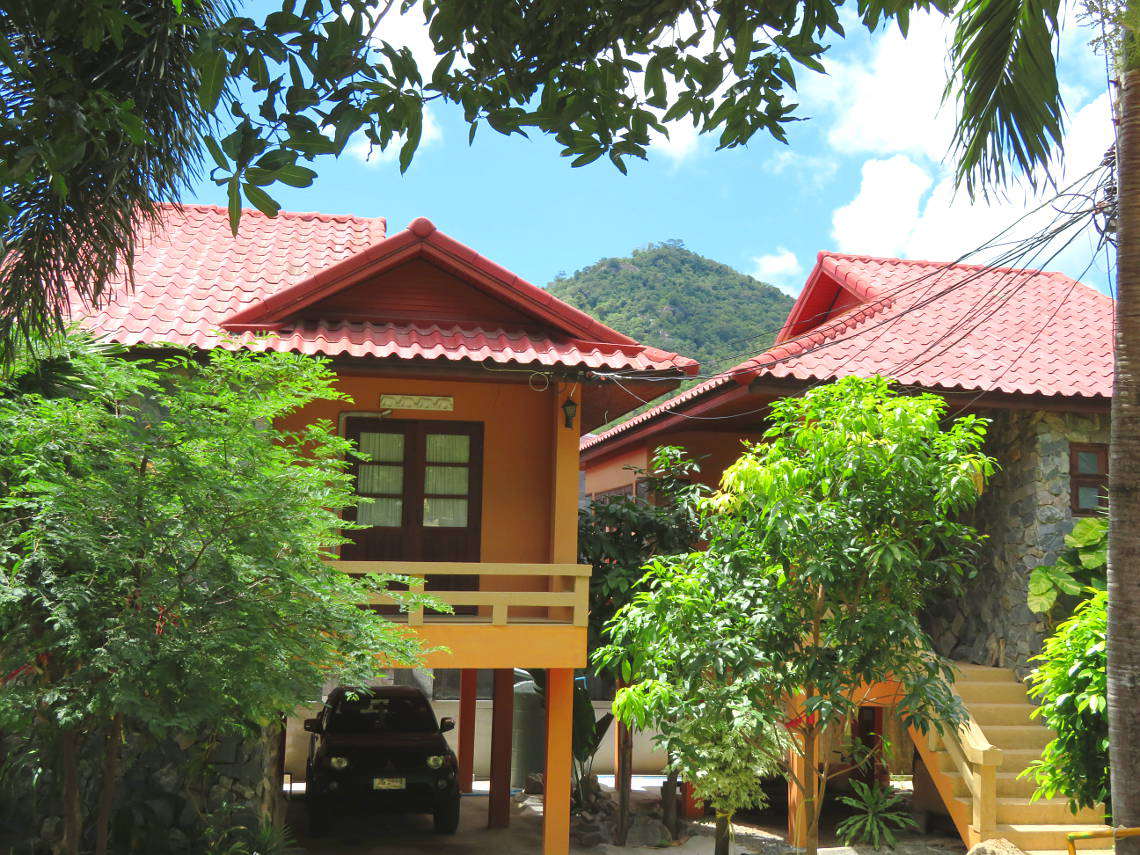
Photo: This is the area where we rented our cozy little house. Photographer: Jens
A Country with Different Rules
One of the most common misconceptions among newly arrived foreigners is that the property market works much the same way as it does back home. People browse villas for sale, visit show homes, and speak with real estate agents.
Before long, it can seem as though buying property is simply a matter of choosing the right home. However, this is where you encounter perhaps the single most important legal principle in Thai land and property law: foreigners generally do not have the right to own land in Thailand. This rule should influence every decision involving house purchases, land purchases, and construction projects.
Many people are surprised when they first hear about this restriction. Others are aware of it but believe it can easily be circumvented. Both groups risk making costly mistakes. To understand why, it is first necessary to understand Thailand's approach to land ownership.
For a long time, land ownership in Thailand has been regarded as a matter of national interest. As a result, legislation has been designed to ensure that Thai land remains predominantly under Thai control.
The result is that foreign nationals generally cannot be registered as landowners. If you come from another country, this may feel unusual. In many parts of the world, we almost take it for granted that the person who purchases a plot of land also becomes its legal owner. In Thailand, the situation is different.
That does not mean foreigners have no options—it simply means that the available options look different.
The Dream of a House by the Sea
If you spend a few months in Thailand, sooner or later you will hear stories about someone who bought a beachfront house, built a villa in the mountains, or established a permanent home near a golf course. These stories are often inspiring, but they are not always complete.
When someone says they "own a house" in Thailand, that statement can mean several very different things in practice.
• It may mean that the person owns a condominium unit in full compliance with Thai law.
• It may mean that the person owns the building itself, but not the land.
• It may mean that the person holds a registered lease agreement.
• It may mean that the property is held through a corporate structure.
Or it may mean that the person does not actually have the legal control they believe they have. It is important to distinguish between the feeling of ownership and actual legal ownership. That distinction ultimately determines how secure the investment really is.
Why So Many Still Choose to Buy
Despite all the legal restrictions, thousands of foreigners continue to buy or build homes in Thailand every year. It is not difficult to understand why.
• For many retirees, Thailand offers a quality of life that would be difficult to achieve in their home countries.
• For families with children, the lower cost of living can make it possible to enjoy a significantly more comfortable lifestyle.
• For entrepreneurs and remote workers, the country offers a climate and lifestyle that attract people from around the world.
Once you decide to stay for the long term, the idea of having a home of your own becomes entirely natural. Nobody wants to feel like a temporary guest forever. At the same time, it is important to understand that buying is not automatically the best solution. In some situations, renting is actually the most financially sensible option, while in others, purchasing a property may be perfectly reasonable.
There is no universal answer—only the answer that is right for you. And to find that answer, you first need to understand the legal rules of the game.
Part 2 – What Does the Law Actually Say?
If there is one thing every foreigner should understand before starting to look at houses or land in Thailand, it is this:
Foreigners are generally not permitted to own land in Thailand.
It does not matter whether you are retired, a business owner, married to a Thai citizen, or have lived in the country for many years—the fundamental rule remains the same. This is not a temporary regulation or an administrative obstacle, but a core principle of Thai law.
Many of the solutions marketed to foreigners are therefore not about circumventing the law, but rather about creating legal alternatives to direct land ownership—and this is where many misunderstandings arise.
When someone says they have "bought a house" in Thailand, it does not necessarily mean they own the land. In fact, it is often the land itself that is the legally decisive part of the transaction.
Houses and Land Are Two Separate Assets
We often think of a house and the land beneath it as a single unit. In Thailand, however, they must be viewed as two separate assets. The land may be owned by one person, while the building on top of it may, in certain circumstances, be owned by another. This distinction is crucial because a foreigner can, in some cases, legally own a house without owning the land beneath it.
This may sound unusual to outsiders, but it is a well-established feature of the Thai legal system. The question therefore becomes not only, "Can I buy the house?" but rather, "What rights do I have to the land on which the house stands?"
The Most Common Options
When foreigners settle in Thailand, housing usually falls into one of the following categories:
Option 1 – Renting
The simplest and most common option is to rent a villa, townhouse, or apartment, just like in many other countries – for a short or long term. The advantages are obvious:
• No legal complexity.
• No risk associated with land ownership.
• No large capital tied up.
• Great flexibility – it’s easy to change residences.
The downside, of course, is that you don’t build any property ownership. Despite this, many foreigners have lived in Thailand for decades without ever buying a home.
Option 2 – Leasehold
This is probably the most common solution when foreigners want long-term control over land and property. In practice, it means renting the land, and sometimes the building, for an extended period through a registered lease agreement. This is where the well-known “30 years” figure comes into play.
What Does a 30-Year Lease Mean?
Thai civil law allows registered lease agreements for real estate of up to 30 years. If the lease is properly registered with the Land Office, the holder gains a legally recognized right of use during the lease period. This is a legal right, not dependent on future promises or verbal agreements.
During the lease period, the leaseholder has strong protection compared to many other private agreements. For many foreigners, a well-structured lease can therefore be a perfectly reasonable solution. Problems arise when marketing promises more than the law allows.
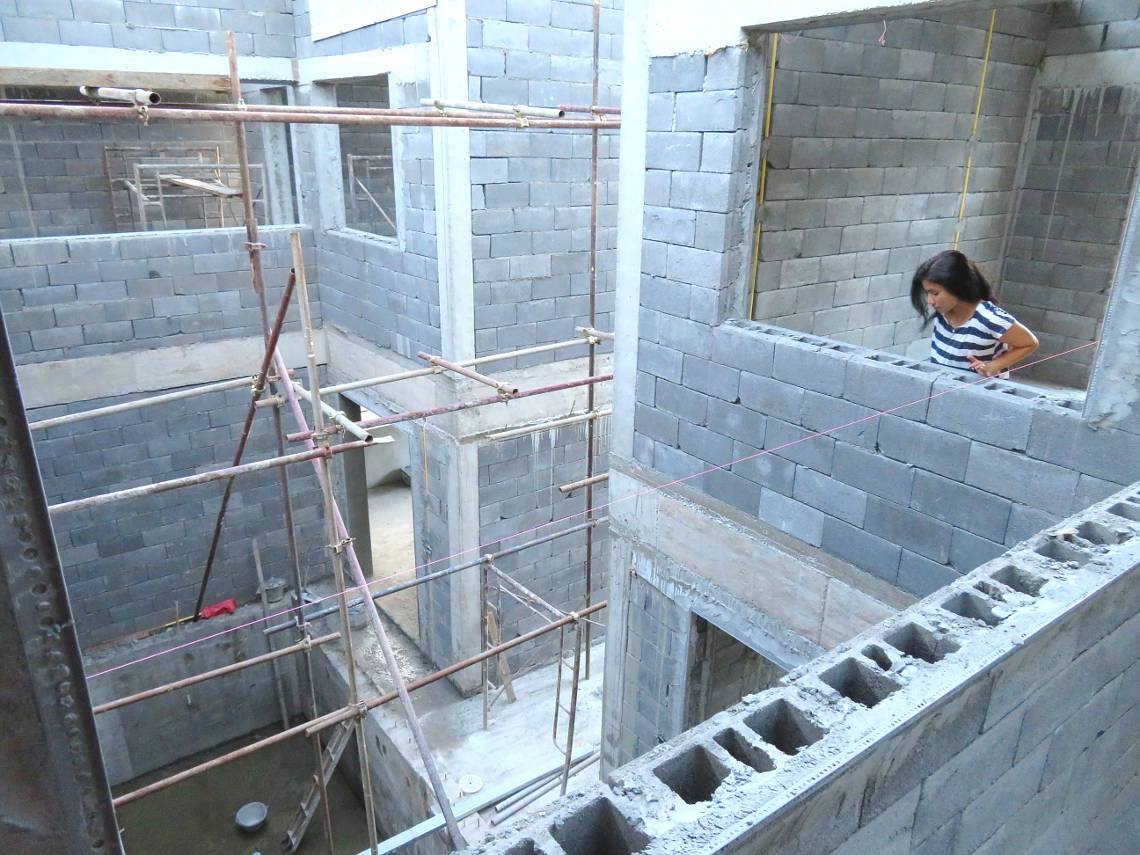
Photo: My wife overlooking our house construction from our current bedroom. The pool is at the bottom. Photographer: Jens
The Myth of 30 + 30 Years
If you’ve looked at property in Thailand, you’ve probably come across phrases like:
“90 years secure ownership” or “30 + 30 + 30 years guaranteed.”
It sounds attractive, of course. Thirty years may seem short, while ninety years can appear more or less “permanent.” But it’s important to distinguish between legal reality and marketing.
What the Law Actually Says
The first 30-year period can be registered. Subsequent periods, however, cannot be pre-registered in the same way. Future extensions therefore depend on whether they are actually executed when the time comes. Many lawyers describe these additional periods as contractual promises rather than already established rights.
The difference is significant. For example:
Imagine you sign a lease in 2030, running until 2060, with a clause for extension for another 30 years. The question is: who owns the land in 2060?
• Is the original owner still alive?
• Have heirs taken over?
• Are there disputes?
• Has legislation changed?
No one can know in advance. Therefore, promises of future extensions do not offer the same legal security as the first registered period.
When Leasing Can Be a Good Option
Despite its limitations, leasing should not be dismissed – quite the opposite. For many retirees and long-term residents, a properly structured lease can be a very rational choice, especially when:
• The purchase price is reasonable
• The contract is legally reviewed
• The landowner is reputable
• The investment does not assume permanent land ownership
Option 3 – Condominium
If you ask Thai property lawyers which type of housing is the simplest for foreigners, you often get the same answer: Condominium.
This is the only housing type where foreigners, under certain conditions, can actually own their residence in their own name. No lease, no nominee, no complicated corporate structure – real registered ownership. But even here, rules must be followed.
The 49 Percent Rule
The law states that foreigners collectively cannot own more than 49% of the total sellable floor area in a condominium project. It’s not about the number of units, but the total floor space. If the foreign quota is already full, additional foreigners cannot usually be registered as owners.
Requirement for Foreign Funds
Financing is another key point. In many cases, the purchase price must be transferred from abroad according to rules for foreign condominium ownership. Planning the payment flow correctly from the start is therefore crucial. Problems usually arise not from the purchase itself, but from insufficient documentation of the funds’ origin.
A Thai Partner or Family
Many residents in Thailand have a Thai partner, and possibly children with them. This changes the conditions, as Thai citizens can, of course, own both property and land.
However, it should be noted that foreigners married to Thai citizens still cannot own land. What happens in the event of divorce or the partner’s death? My advice is always to consult a lawyer when buying or building a house in these situations.
Superficies (Building Rights)
Superficies allows a person to have the legal right to own a building on a plot of land that belongs to someone else. It is a way to legally separate land ownership from building ownership.
For a foreigner building a house on land owned by a Thai family member, this can provide much stronger protection than relying on informal agreements alone.
Usufruct (Lifetime Use Rights)
Another common concept is usufruct. In Thai, it is often called สิทธิ์เก็บกิน (sìt kep kin). This is not ownership, but a right of use. It allows a person to use the land, live on it, and benefit from its yields for a set period or for life. In certain family situations, this can be a useful solution. Each arrangement must still be analyzed based on the individual’s circumstances.
When Something Sounds Too Good to Be True
If someone offers a solution that seems to give foreigners the same rights as Thai landowners, you should pause and ask more questions. It is best to contact an independent law firm before making any purchase. The small extra cost is usually well spent.
Part 3 – Who Should Rent and Who Should Buy?
There is no one-size-fits-all answer. The best option depends entirely on your personal circumstances. Anyone who claims that everyone should buy is wrong, and anyone who claims that everyone should rent is equally wrong. The right choice depends on who you are, how long you plan to stay, and the kind of life you want to live.
That is why I usually recommend that people first consider their situation and then choose their housing arrangement—not the other way around.
The Holiday Home Seeker
Let's start with the most common category of all: the person who spends a few weeks or a few months in Thailand each year. Perhaps you spend the winter in Hua Hin, Phuket, or Koh Samui. Perhaps you have started dreaming about owning a place of your own.
From an emotional perspective, the appeal is easy to understand. From a financial and practical perspective, however, a purchase is often difficult to justify. The property will sit empty for most of the year, maintenance must be arranged, insurance and other practical matters need to be managed, and you are tied to the same location every time you visit Thailand.
For this group, renting is often the most flexible solution. It allows you to retain the freedom to change neighborhoods, cities, or even countries without having to sell anything.
The Retiree
This is where the question becomes more interesting. Many retirees spend most of the year in Thailand. Some live here permanently, while others spend eight to ten months of the year in the country.
In these situations, purchasing a property can be entirely reasonable, particularly if you have found a place where you genuinely want to stay for the long term. At the same time, there are several important questions worth asking:
• What are the inheritance implications?
• Will your family want to keep the property in the future?
• How easy will it be to sell?
• What happens if your health circumstances change?
For some people, a condominium is the ideal solution. For others, a well-structured lease arrangement may be sufficient. The important thing is that the decision is based on realistic expectations, not on the assumption that Thailand operates exactly like your home country.
The Family with Children
For families with children, stability often carries more weight than flexibility. Once children are attending school, participating in activities, and building friendships, the ability to plan several years ahead becomes increasingly important.
In these situations, a permanent home can provide both security and continuity. However, this is also where the legal questions surrounding ownership become particularly important.
You should also consider what might happen if the family eventually returns to their home country or relocates elsewhere. The larger the investment, the more important the legal framework becomes.
The Digital Nomad
In recent years, Thailand has attracted a new generation of visitors: people who work online and can take their jobs wherever they choose to live. For many in this group, freedom is the entire point. Thailand today. Bali tomorrow. Portugal next year.
In these circumstances, buying property can sometimes create more problems than it solves. Flexibility decreases, capital becomes tied up, and attention shifts toward property management rather than work and lifestyle.
For most digital nomads, renting therefore remains the most logical choice.
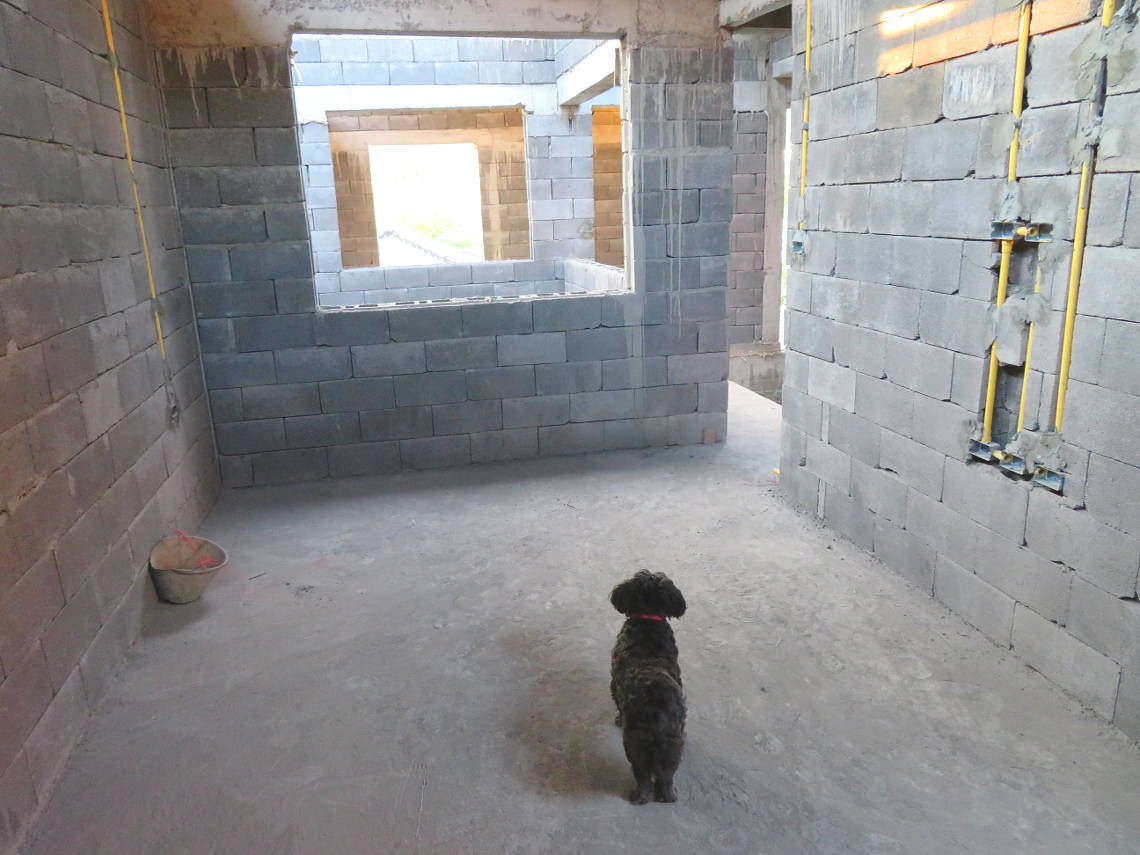
Photo: Our beloved shih-poo Pandi (2007–2015) taking a stroll around what was then our construction site. Photographer: Jens
The Person Who Wants to Build Their Dream Home
Over time, many long-term residents reach a point where they want to create something of their own. Not just buy a place to live, but build a home. However, this is also where legal misunderstandings can become most costly.
A construction project should never begin with floor plans and design drawings. It should begin with the legal framework:
• Who owns the land?
• What protections are in place if circumstances change?
• What happens in the event of inheritance?
• What happens in the event of a sale?
Once those questions have been answered, you can start thinking about layouts, roof angles, and garden design.
There Is No Perfect Setup
One of the biggest lessons I have learned during my years in Thailand is that many people search for the perfect solution—the arrangement that offers full control, full security, and full flexibility. The problem is that such a solution rarely exists. Every option involves compromises.
Leasehold offers certain advantages and certain limitations. Condominium ownership offers others. Renting provides flexibility but no ownership. Direct land ownership is generally not available to foreigners.
It is therefore not about finding a perfect solution. It is about finding the solution whose downsides you can live with.
Some Advice for Those Considering a Purchase
If I were to summarize everything into a few simple pieces of advice, they would be the following:
1. Don’t rush
Thailand is not going anywhere. The house you are looking at today is not the last property that will ever come onto the market. Time is often the buyer’s best friend.
2. Make sure you understand the legal framework before making a decision
Emotions are useful when choosing where to live, but they are useless when someone is reviewing your legal documents.
3. Seek independent legal advice
The larger the investment, the more important this becomes. Never rely solely on legal information provided by the seller. Their job, after all, is to sell.
4. Ask yourself what you actually own
This is perhaps the most important question of all. Not what you control today, but what you legally own under Thai law.
My Own Reflections and Advice
Looking back on my years here, I have come to the conclusion that the question of renting versus buying is really about how you choose to live your life based on your own circumstances. We rented for many years and later built our own house. For us, that was the right path, but for someone else, a completely different solution may be better.
Thailand offers fantastic opportunities for those who want to build a life here. But those opportunities become much better—and above all safer—when they are based on knowledge rather than assumptions.
If there is one single thought I hope the reader takes away from this article, it is this:
The most important thing is not whether you rent or buy. The most important thing is that you understand what you are getting into. Because by the time the legal details matter, it is usually too late to start reading the fine print.
✪ More posts: Here you will find all my posts