
Thailand Hit by Widespread Flooding
September 29, 2026We all know that Thailand is a hot country. It is also a country where much of the climate is shaped by the monsoons, which can bring large amounts of rainfall at times. During the southwest monsoon, moist air is brought in from the Indian Ocean and the Andaman Sea. Combined with mountain ranges and the warm tropical air over the sea, this can produce very heavy rain. In southern Thailand, the timing of the rainy season varies depending on which coast is affected by the prevailing monsoon.
Thailand has several major rivers and large areas of low-lying land, making it easier for water from heavy rains to accumulate in some places. Bangkok lies in the flat Chao Phraya Delta, close to the sea and on soft layers of soil. Several factors come together here to increase the risk of flooding: heavy rain, high water levels in the river and canals, tides, and a drainage system that can struggle to handle very large amounts of water quickly. Thailand has therefore long experienced both river flooding and flooding caused by large amounts of rain falling in a short period, particularly in densely populated areas.
Climate change is another factor, but its significance needs to be viewed in a broader context. There is evidence that extreme rainfall has become more intense in many places and that some types of very heavy precipitation are increasing. At the same time, rainfall patterns are also influenced by natural variations such as El Niño and La Niña, as well as by urbanization and changes in land use.
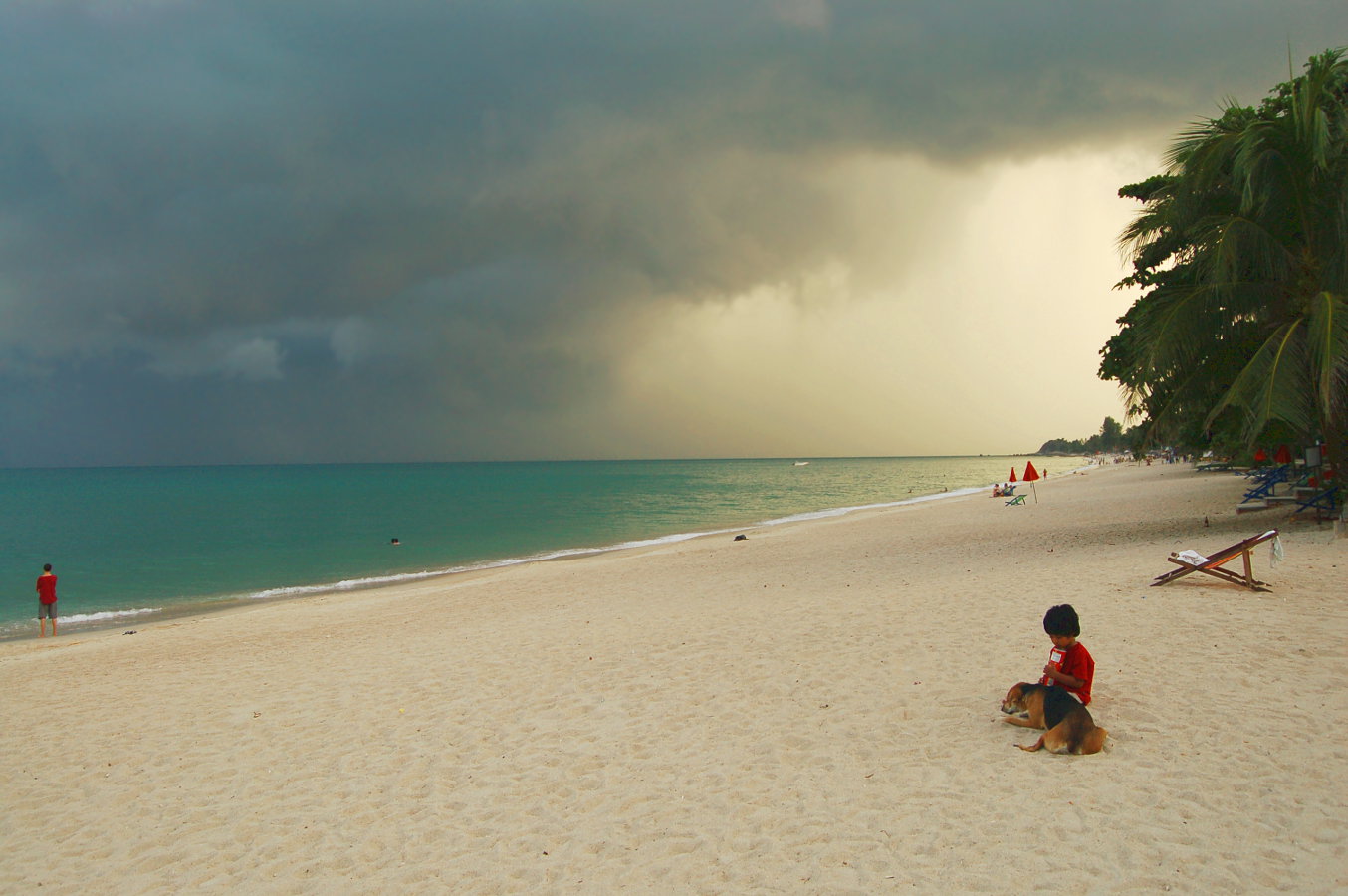
Image: Heavy rain clouds over Lamai Beach are a sign that it is time to head indoors. Photographer: Jens.
The Floods of Fall 2026
Flooding began affecting Thailand in mid-September 2026 and has impacted large parts of the country. According to Thai authorities, a total of 42 provinces and Bangkok had been affected by flooding since September 16. As of September 29, 23 deaths had been reported and around 2.6 million people had been affected.
Bangkok was particularly hard hit after around 300 millimeters of rain fell in 48 hours. Major roads and residential areas were flooded, and thousands of people were evacuated. The rain also disrupted air travel. Thai Airways faced major staffing problems at Suvarnabhumi Airport after many employees were unable to get to work because of the flooding. Around 5,600 pieces of luggage were left waiting at the airport, and the airline was forced to cancel around 30 percent of its departures from Bangkok.
Flooding naturally means much more than traffic disruptions. People have been forced to leave their homes, businesses have closed, and vehicles, homes, farmland, and other property have been damaged. By the end of September, the economic losses from the fall floods had reached approximately 12 billion baht.
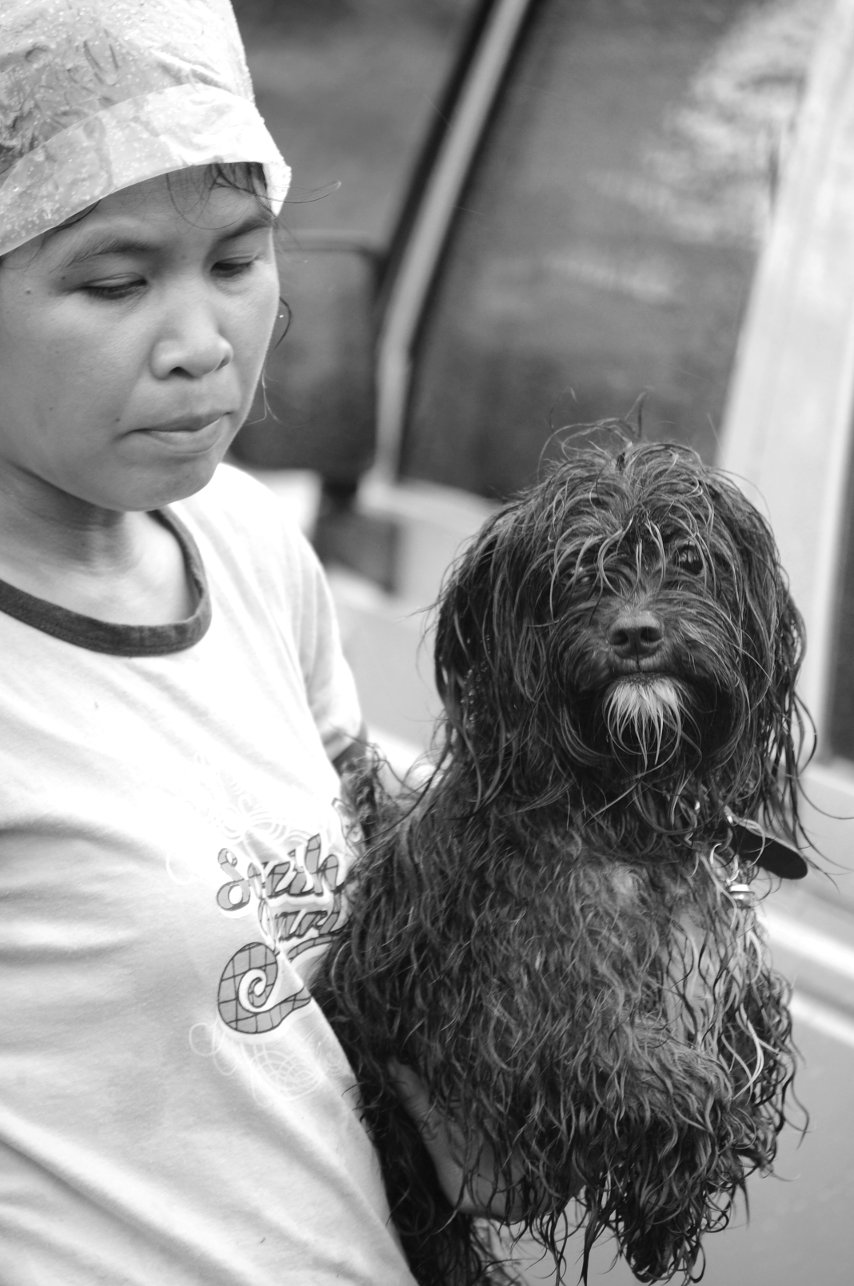
Image: A woman takes care of a soaking wet dog. Photographer: Jens.
Thailand Has Been Hit Before
Thailand has experienced major flooding before. In 2011, the country was hit by one of the most extensive floods in modern times. According to the Hydro-Informatics Institute of Thailand, 74 provinces and more than 16 million people were affected, while 1,026 people died.
Thailand was also hit by widespread flooding in 2013. Official statistics show that 74 provinces were affected and around 5.9 million people were impacted. During the winter of 2016–2017, southern Thailand was again hit by severe flooding. Twelve provinces were affected during December and January, and according to the authorities, around 1.8 million people were impacted.
Video: I filmed this on my phone in 2011 (hence the limited quality), when we had to travel from Surat Thani Airport in a military vehicle because the water was up to a meter deep in the streets. Notice how some people are fishing with nets in the flooded streets. Filmed by: Jens.
What Can You Do During Flooding?
For anyone staying in Thailand during heavy rain, the simplest advice is often the best: do not try to drive through flooded roads. This applies to both cars and motorcycles. The water may be deeper than it appears and can hide potholes, curbs, and other obstacles. Try to avoid walking through fast-moving or heavily contaminated water.
Keep rain gear or an umbrella handy. You can often buy inexpensive ones at the nearest store. Also expect a journey to take much longer than planned. If you are heading to an airport, bus terminal, or train station, leave early and check traffic conditions before leaving your hotel or home. Follow the latest weather and traffic updates throughout the day.
The most important thing is not to underestimate a tropical downpour. Thailand is a country where heavy rain is a natural part of the climate. When the rain pours down, conditions can change quickly.
Flooding in Thailand is and will remain a challenge.
✪ Read more: All my articles and posts
✪ Enjoy my articles? Feel free to buy me a coffee – much appreciated!