
Cost of Living in Thailand – Housing and Food Prices
August 17, 2026Thailand is often associated with a relatively low cost of living, but costs can vary considerably depending on where in the country you are, as well as where you choose to live and eat. Someone vacationing or living outside the main tourist areas will generally have much lower expenses than someone living comfortably near the beach in a popular tourist destination. In this article, I look at approximate housing and food costs to give you a general idea of the cost of living in Thailand.
Price Levels in Different Parts of Thailand
The cost of living in Thailand can vary considerably depending on where you are. Naturally, it is generally cheaper to live in a village or smaller town far from the major tourist areas than in popular destinations such as Phuket, Koh Samui, or Krabi. The table below provides an approximate comparison of price levels in different parts of Thailand, where 1 represents a very low price level and 5 a high price level.
| Area | Price Level | Comment |
|---|---|---|
| Non-Tourist Area | 1-2 | Often the lowest price level in Thailand. |
| Bangkok | 1-5 | Huge variation – from very inexpensive to extremely upscale. |
| Phuket | 3-5 | One of the highest price levels among tourist destinations, although cheaper options are available. |
| Pattaya | 2-3 | Strong competition helps keep prices relatively low. |
| Chiang Mai | 2-3 | Often cheaper than many other tourist destinations. |
| Koh Samui | 2-5 | The island's location affects prices. |
| Koh Phangan | 2-4 | Affordable options are available, but the island's location increases costs. |
| Koh Tao | 3-5 | Limited space and dive tourism contribute to higher prices. |
| Hua Hin | 2-5 | Relatively high prices near the beach and in popular areas. |
| Krabi | 2-5 | Popular destinations and beach areas tend to have higher prices. |
| Phang Nga | 2-4 | Prices vary considerably between coastal areas and inland. |
✪ Comment: The prices above are approximate guidelines and vary depending on location, season, booking time, and standard. Accommodation in a popular tourist destination during high season can cost several times more than similar accommodation in a smaller town. The differences are not only about where you live, but also about the lifestyle you choose. Even in more expensive areas, it is often possible to find cheaper alternatives, while everyday expenses can quickly increase if you choose a higher standard, international restaurants, and accommodation in desirable locations.
Short-Term Accommodation Costs
For those visiting Thailand for a shorter period, there is an enormous range of accommodation options. Prices are primarily influenced by the season, location, how far in advance you book, and the standard of the accommodation. A room 100 meters from the beach can cost a fraction of what a hotel room right on the beach costs.
| Accommodation | Basic | Mid-Range | Higher Standard |
|---|---|---|---|
| Bungalow or guesthouse | 200–800 baht | 800–1,500 baht | 1,500+ baht |
| Hotel room | 400–1,200 baht | 1,200–3,000 baht | 3,000+ baht |
| Apartment or condo | 800–1,500 baht | 1,500–4,000 baht | 4,000+ baht |
| House or villa | 1,000–2,500 baht | 2,500–6,000 baht | 6,000+ baht |
✪ Comment: The prices shown are per night and should be considered approximate guidelines. Booking well in advance can make a significant difference in price. As the table shows, the cost of the same type of accommodation can vary greatly depending on the location and destination. It is still possible to stay in a basic bungalow for less than 1,000 baht per night, while large and luxurious villas can cost tens of thousands of baht per night.
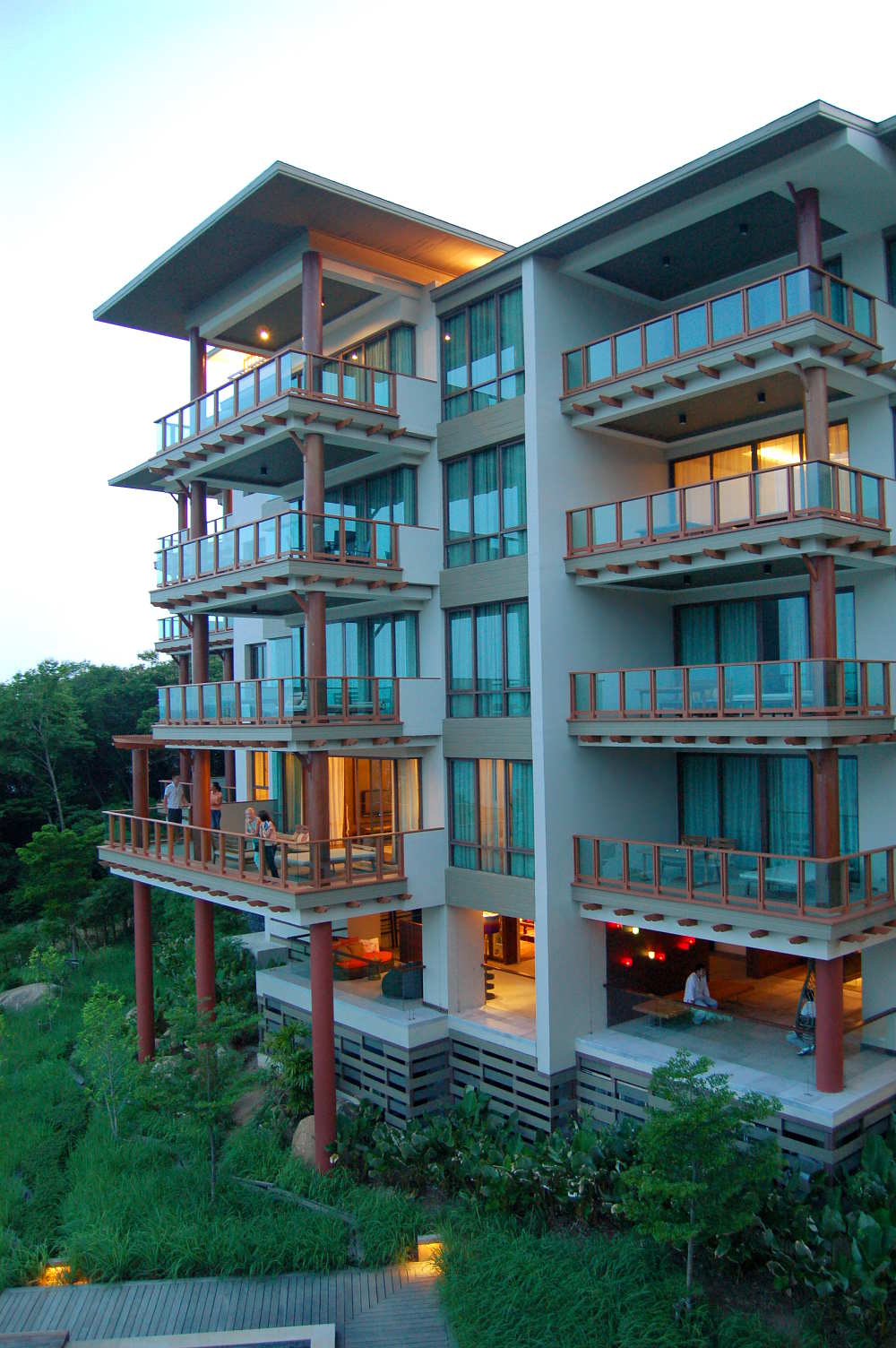
Image: A hotel on Koh Samui in the warm evening light. Photographer: Jens.
Long-Term Accommodation Costs
For those planning to stay in Thailand for several months, the monthly cost is often considerably lower than with short-term rentals. Many people staying in Thailand for longer periods choose an apartment, condo, or house depending on their needs, budget, and how long they plan to stay.
| Accommodation | Monthly Rent |
|---|---|
| Basic apartment outside tourist areas | 4,000–8,000 baht |
| Basic apartment in a tourist destination | 8,000–15,000 baht |
| Modern apartment or condo | 15,000–40,000 baht |
| House or villa | 15,000–100,000+ baht |
✪ Comment: Even with long-term accommodation, location is often the most important factor affecting the price. A home just a few hundred meters from a desirable area, such as a beach or popular street, can cost considerably less than a similar property located right in the middle of that desirable area. It can therefore be wise to first think about what you want your everyday life to be like before choosing where to live.
Restaurant and Grocery Costs
Food costs in Thailand vary considerably depending on what you eat and where you choose to eat. Local Thai food is often inexpensive, especially at small restaurants, food markets, and simple street food stalls. A basic meal of rice, noodles, or another Thai dish can still cost around 50–100 baht, while restaurant prices in popular tourist areas are considerably higher.
Those who mainly eat local food can therefore keep their food budget very low. At the same time, costs increase for those who enjoy international food, imported products, and more upscale restaurants. In tourist destinations such as Phuket, Koh Samui, and Pattaya, there is a wide selection of international restaurants, but prices can in many cases be similar to those found in Europe, North America, or Japan.
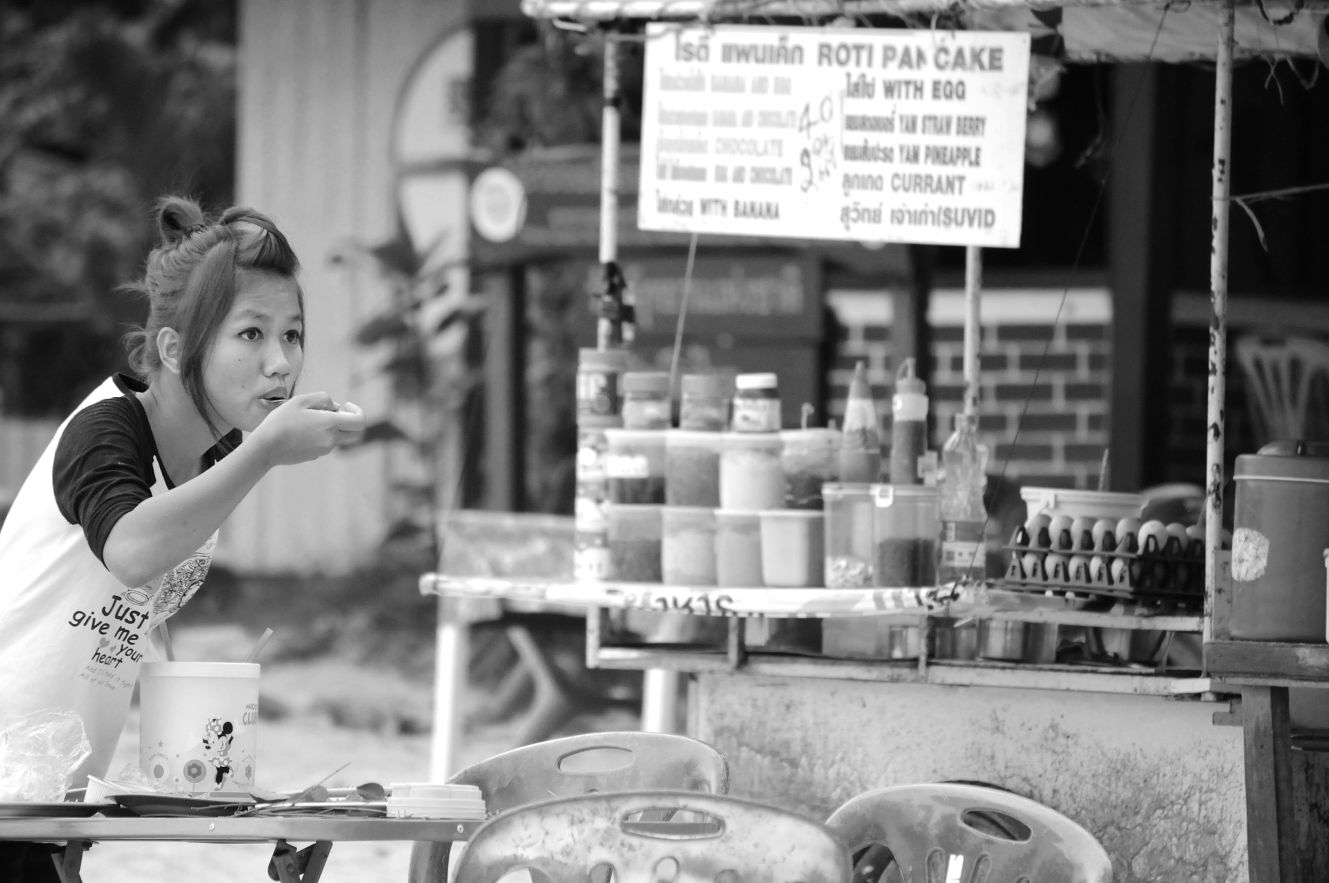
Image: A girl on Koh Samet tasting food. In the background is a cart selling roti, Thai pancakes. Photographer: Jens.
How Much Does a Restaurant Meal Cost?
The cost of eating out varies greatly depending on the type and location of the restaurant. A meal at a simple Thai restaurant may cost no more than a couple of hundred baht for two people, while dinner at a more upscale restaurant serving international food can easily cost a couple of thousand baht. At truly high-end restaurants, hotels, and beach clubs, the bill can be considerably higher.
It is therefore difficult to give a general cost for eating out in Thailand. Those who eat at local restaurants can keep their expenses very low, while those who frequently choose restaurants with international menus, imported ingredients, and alcohol will spend more. The wide range of options makes it relatively easy to adjust food costs to fit your budget.
Buying Groceries in Thailand
Thailand has plenty of food markets and grocery stores. The selection ranges from small convenience stores such as 7-Eleven and Tops to larger stores and supermarkets such as Lotus's and Makro. Where you shop often depends on what you need, how much you want to buy, and how much you are willing to spend.
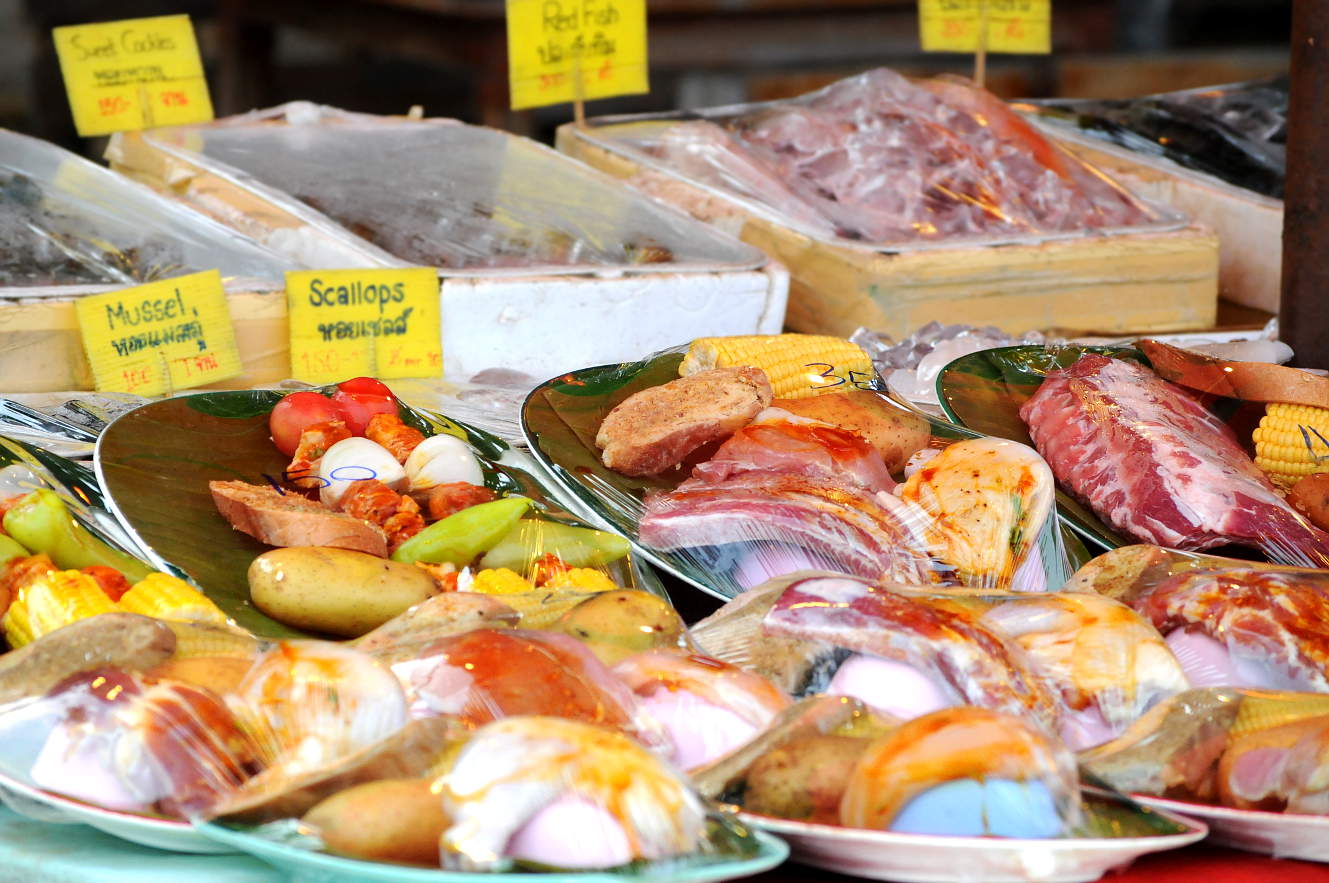
Image: A Thai food market with fresh fish, seafood, meat and vegetables. Photographer: Jens.
Food Markets
The traditional way to buy food in Thailand is at a local market. Food markets can be found almost everywhere, including in smaller communities. Bangkok alone has hundreds of markets. The selection varies from one market to another, but vegetables, fruit, fish, and meat are commonly available.
Local Small Shops
Local small shops are often family-run businesses selling vegetables, canned goods, drinks, rice, eggs, noodles, candy, and tobacco. Many also sell alcohol, such as beer, rice wine, and sometimes spirits. These small shops, however, have found it increasingly difficult to compete with convenience stores such as 7-Eleven and Tops.
7-Eleven
7-Eleven can be found almost everywhere in Thailand and has become the go-to place for many people to buy food and other everyday items. The selection includes drinks, snacks, prepared meals, sandwiches, noodles, rice, eggs, and basic cooking ingredients. The selection can vary somewhat from one store to another.
Prices are generally reasonable, and the stores are usually open 24 hours a day. They are also often found in smaller communities and places where there are no larger grocery stores. In Thailand, 7-Eleven is much more than a traditional convenience store. The selection is extensive and includes many relatively healthy options, such as prepared meals, yogurt, fruit, eggs, and other groceries. A health-conscious person can therefore do a significant portion of their grocery shopping at 7-Eleven, although it will naturally be somewhat more expensive than buying the same items at a larger grocery store.
Tops Daily and Tops Supermarket
Tops Daily is a convenience store that is similar to 7-Eleven in many ways, with a comparable selection, although brands and products can vary.
Tops Supermarket has considerably larger stores and a wider selection of both Thai and international foods. In addition to fresh vegetables, fruit, meat, and fish, there is a large selection of imported products from many parts of the world. Imported products can be quite expensive in some cases. An imported cheese, for example, may cost around twice as much as in Europe, and the same applies to other food products that are imported in relatively small quantities.
Lotus's
Lotus's is one of Thailand's largest grocery chains and comes in several different formats. The larger stores are supermarkets with a very wide selection of food, drinks, and other household products, while Lotus's Go Fresh stores are smaller and more similar to 7-Eleven and Tops.
The larger Lotus's stores offer a wide selection of fresh vegetables, fruit, meat, fish, dairy products, and other everyday groceries. You can do most of your weekly grocery shopping in one place. Prices are generally competitive, making Lotus's a good option for those looking to keep costs down.
Lotus's Go Fresh is more comparable to a larger convenience store than a traditional supermarket. The selection is smaller, but includes fresh food and many of the most common household items. For smaller grocery runs, Go Fresh is therefore a practical alternative to the larger Lotus's stores.
Big C
Big C is another of Thailand's major grocery chains and, like Lotus's, comes in several different formats. The larger stores are supermarkets with a wide selection of food, drinks, and other everyday products, while Big C Mini stores are smaller and mainly intended for smaller purchases.
The larger Big C stores offer fresh vegetables, fruit, meat, fish, dairy products, and a wide range of other groceries. The selection also extends well beyond food, with household products, clothing, and basic electronics, making Big C a practical place to buy many different types of goods at the same time. Prices are generally low, making Big C a good option for those looking to buy groceries at reasonable prices.
Big C Mini stores are smaller convenience stores. The selection is limited compared with the larger stores, but they are often a practical option for everyday purchases.
Makro
Makro primarily caters to business customers such as restaurants, hotels, and other companies, but private individuals also shop there. The selection consists mainly of food, often in larger packages and quantities, but also includes kitchenware and household products.
The stores are large and somewhat basic, with a focus on function rather than interior design or decoration. The atmosphere is more like a wholesale store than a traditional grocery store. This makes Makro particularly useful for those who want to buy larger quantities and keep costs down.
For private individuals, Makro can therefore be a good option for larger grocery purchases. Package sizes are sometimes bigger than what an ordinary household needs, but prices are very competitive. The selection includes both Thai and imported products, although Thai products dominate.
Villa Market, Foodland, and Rimping
There are also several smaller and more specialized grocery chains in Thailand. Villa Market, Foodland, and Rimping cater more to customers looking for imported foods that may not be available in regular grocery stores.
Villa Market has specialized in imported foods since it was founded. It offers a large selection of cheese, cold cuts, meat, prepared foods, snacks, candy, and other imported products from a wide range of countries. There is also an extensive selection of imported drinks and alcohol. Villa Market is therefore particularly useful for those looking for familiar products from home, although imported products are generally much more expensive than comparable Thai products.
Foodland also has a large international selection and offers a wide range of both Thai and imported foods.
Rimping is a regional chain with stores in Chiang Mai and surrounding areas. The selection focuses on quality products and includes both local and imported foods. Rimping is therefore particularly interesting for those living in northern Thailand.
These chains are not as widely available throughout Thailand as 7-Eleven, Lotus's, Big C, and other major chains. Whether you can shop at them therefore depends on where in the country you are staying.
Local Producers
In addition to the larger grocery stores, there are often local producers who sell their own food products. These may include locally made ice cream, chocolate, bread, baked goods, sauces, jam, and other specialties.
Prices naturally vary, but locally produced products do not necessarily have to be expensive. In some cases, they can also be a nice alternative to imported products while giving you the opportunity to buy something that is actually made locally.
Online Shopping – Lazada and Shopee
You can also buy groceries and other food-related products online. Platforms such as Lazada and Shopee bring together a large number of stores and sellers, giving shoppers access to a much wider selection than any single grocery chain can offer.
You can find everything from everyday Thai groceries to imported products, snacks, candy, drinks, coffee, and tea. There are also various specialty products that can be difficult to find in regular stores. Many local businesses use these platforms to sell their own products.
Prices vary widely between sellers and products. It can therefore pay to compare prices, shipping costs, and reviews before placing an order. For those living in or visiting Thailand, online shopping is a practical complement to the country's regular grocery stores.
✪ Note: In a future article, I will look at other common expenses for people visiting or living in Thailand, including transportation, electricity, internet, shopping, and other everyday costs.
✪ Related reading: Renting or buying in Thailand?
✪ Read more: All my articles and posts
✪ Enjoy my articles? Feel free to buy me a coffee – much appreciated!